

Introduction
In today’s digital marketplace, distinguishing between Artificial Intelligence (AI) and bots is crucial for sales managers who want to enhance customer engagement and drive revenue. AI systems possess advanced capabilities that adapt and learn from interactions, while traditional bots rely on fixed scripts, which can limit their effectiveness in complex scenarios. This distinction raises an essential question: how can sales leaders navigate the evolving landscape of AI and bots to optimize their strategies and improve customer experiences? Understanding these differences is vital for leveraging technology effectively in sales.
Define AI and Bots in Sales Context
In the commercial landscape, Artificial Intelligence (AI) represents systems that can perform tasks traditionally requiring human intelligence, such as understanding natural language, recognizing patterns, and making data-driven decisions. AI voice systems are engineered to learn from interactions, adapt to new information, and engage in nuanced dialogues with clients. By analyzing customer data in real-time, these systems deliver personalized experiences that significantly enhance customer interaction and drive revenue growth. For instance, businesses utilizing Intone's AI voice assistants have reported lead conversion rates soaring by up to 30%, showcasing their effectiveness in complex selling scenarios. Additionally, the analytics dashboard empowers teams to monitor key metrics and refine scripts, ensuring continuous performance improvement.
On the other hand, in the debate of AI vs bot, bots, often referred to as chatbots, are more straightforward automated systems that function based on predefined scripts to accomplish specific tasks. They excel in handling repetitive inquiries and executing simple commands, such as responding to frequently asked questions or scheduling appointments. While bots can efficiently manage a high volume of interactions, they lack the adaptability and learning capabilities inherent in AI systems, rendering them less effective in intricate selling situations. As the market evolves, understanding the distinction of AI vs bot becomes crucial for managers aiming to enhance their engagement strategies. However, it is vital to recognize potential challenges, such as data governance issues, which may impact the deployment of AI systems. Looking ahead, projections suggest that by 2027, AI systems will automate a significant portion of business operations, underscoring the need for managers to stay informed and prepared for these changes.

Compare Functionalities of AI Agents and Bots
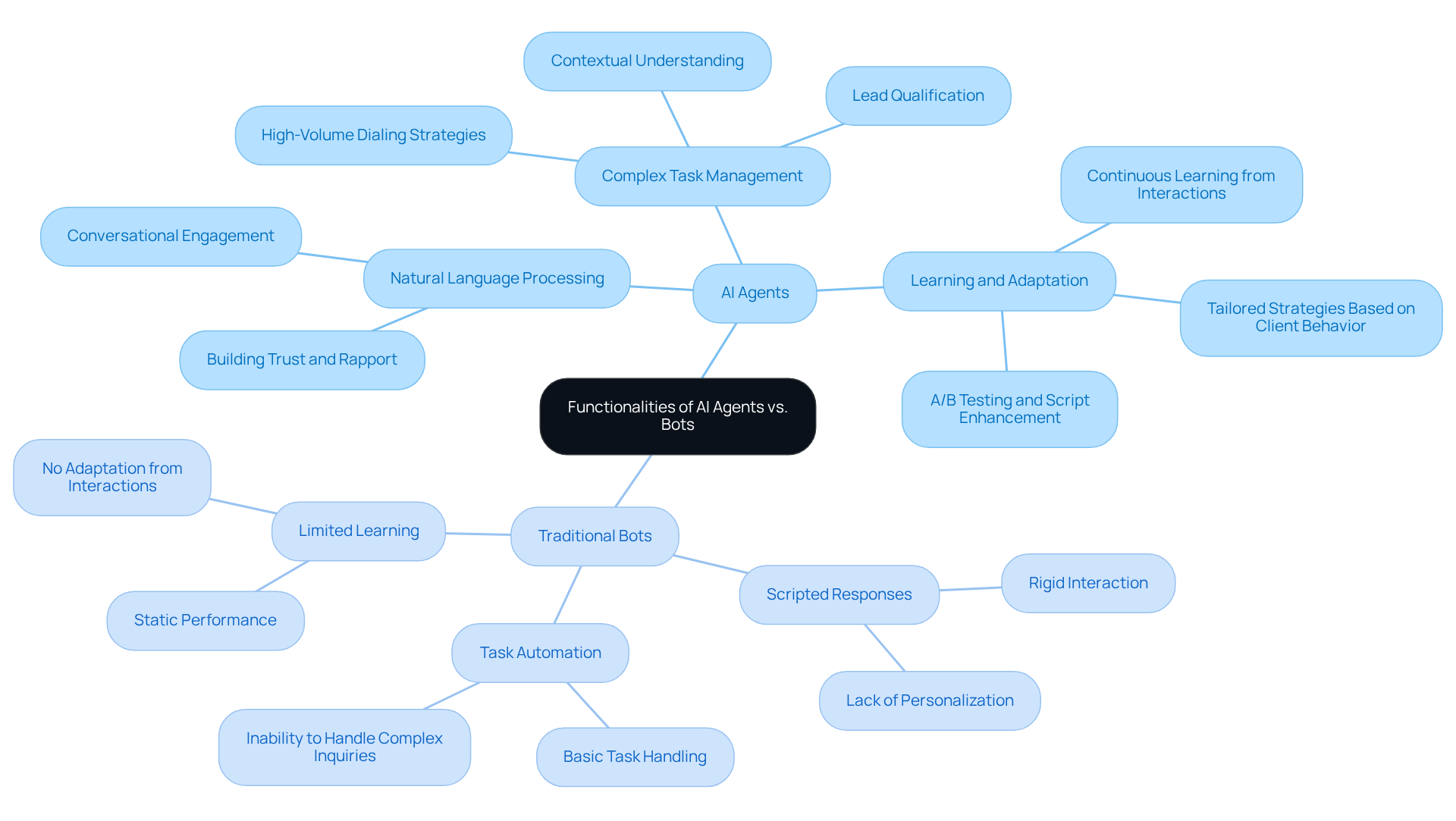
When it comes to enhancing sales processes, AI agents like those offered by Intone stand out with a suite of advanced capabilities that can transform your approach:
- Natural Language Processing (NLP): Intone's AI agents leverage sophisticated NLP techniques to engage with customers in a conversational manner. This human-like interaction is essential for building trust and rapport, making every customer feel valued and understood.
- Learning and Adaptation: These agents continuously learn from past interactions, refining their responses and tailoring their strategies based on client behavior. This ongoing adaptation leads to improved engagement over time. With tools designed to enhance scripts, conduct A/B testing, and replicate the voices of top-performing human representatives, Intone ensures its agents are always evolving to meet customer needs.
- Complex Task Management: Intone's AI agents excel at managing intricate processes, such as lead qualification and follow-ups, which require contextual understanding and informed decision-making. They can also implement high-volume dialing strategies tailored to specific sales objectives, significantly boosting overall efficiency.
In stark contrast, traditional bots are limited to predefined functionalities:
- Scripted Responses: Bots operate on rigid scripts, leading to interactions that can frustrate customers seeking personalized assistance. Unlike Intone's AI systems, when considering AI vs bot, they lack the flexibility to adapt to the natural flow of conversation.
- Task Automation: While bots can automate repetitive tasks like scheduling meetings or providing basic information, they falter with complex inquiries that demand nuanced understanding. Intone's AI systems, however, can extend conversations with automated messages and built-in integrations, delivering a seamless experience.
- Limited Learning: Bots do not learn from interactions, which restricts their adaptability and hinders performance improvement. In contrast, Intone's AI systems are designed for continuous enhancement, allowing for real-time observation and feedback.
Overall, when considering AI vs bot, it's clear that while bots can manage a high volume of straightforward tasks, Intone's AI representatives provide a more sophisticated approach that enhances customer interaction and drives revenue growth. Notably, 81% of teams utilizing AI report increased income, and companies employing generative AI have seen a 15% rise in conversion rates. The AI representatives market is projected to reach $50.31 billion by 2030, underscoring the growing importance of AI technology in marketing strategies.
Evaluate Pros and Cons of AI Agents vs. Bots
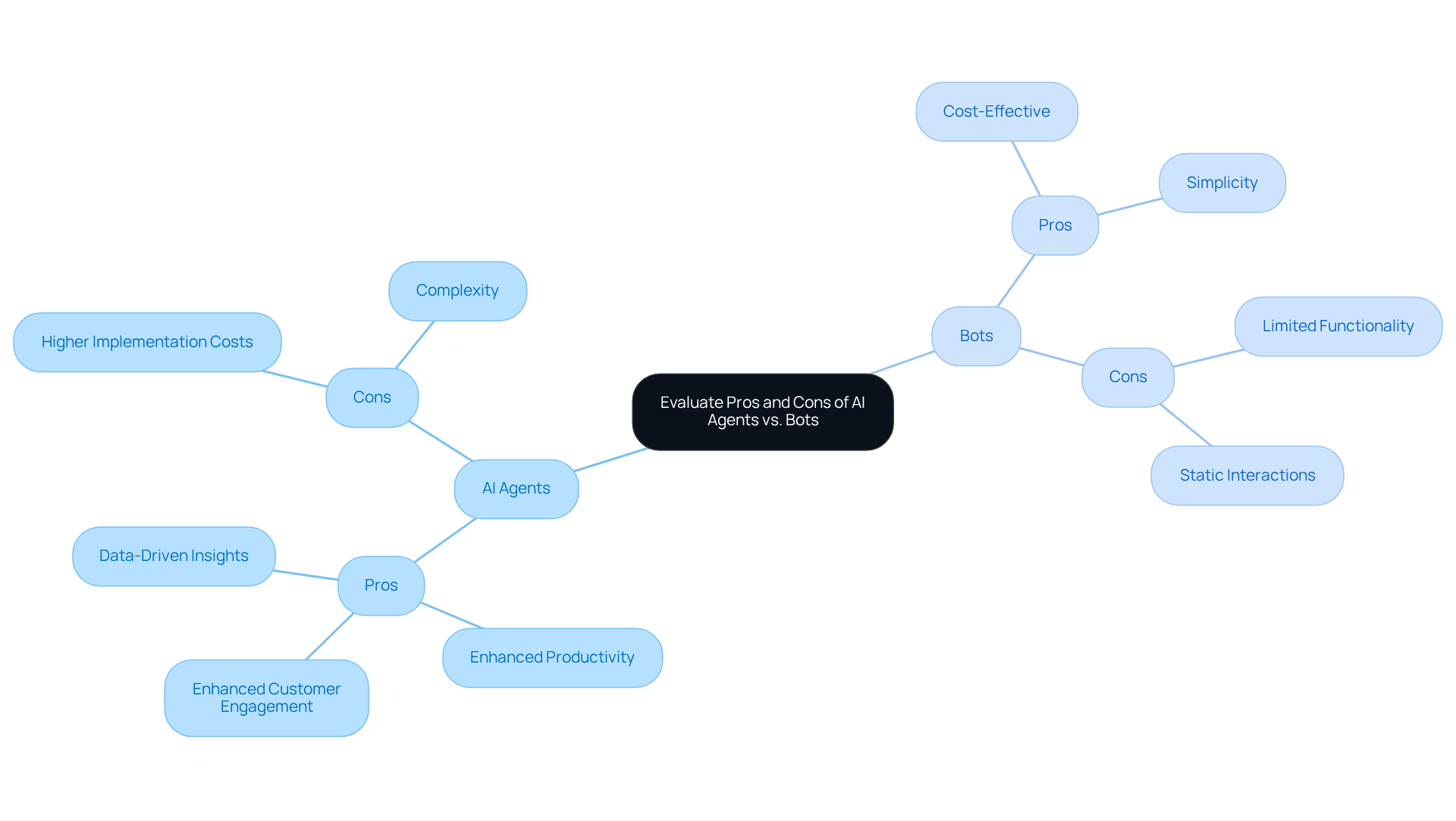
When evaluating the pros and cons of AI agents and bots, several critical factors come into play:
AI Agents:
- Pros:
- Enhanced Customer Engagement: AI agents, such as those offered by Intone, provide personalized interactions that lead to higher customer satisfaction and loyalty. For instance, GCS significantly improved their revenue efficiency by employing customizable AI voice assistants, which can be tailored to specific business needs without requiring extensive configuration.
- Enhanced Productivity: These agents can manage intricate tasks and automate follow-ups, allowing teams to focus on high-value activities. The representatives are designed for easy deployment, enabling teams to concentrate on strategic initiatives.
- Data-Driven Insights: AI systems analyze customer data to deliver actionable insights that enhance sales strategies. With advanced analytics and real-time insights, companies can monitor performance, compare representatives, and conduct A/B tests to refine their approach.
- Cons:
- Higher Implementation Costs: Developing and maintaining AI systems can be more expensive than simpler bot solutions. However, Intone mitigates this with a streamlined setup process that reduces initial investment.
- Complexity: AI agents require sophisticated infrastructure and ongoing training to remain effective. Intone simplifies this with a user-friendly agent editor that allows for easy customization.
Bots:
- Pros:
- Cost-Effective: Bots are generally cheaper to implement and maintain, making them accessible for smaller businesses.
- Simplicity: They are easy to set up and can quickly handle a large volume of straightforward inquiries.
- Cons:
- Limited Functionality: Bots struggle with complex tasks or adapting to new situations, which can lead to customer frustration.
- Static Interactions: Their scripted responses may not meet the needs of individuals seeking personalized assistance.
In conclusion, while AI systems offer sophisticated features that can significantly enhance revenue processes, bots provide a more economical option for managing fundamental tasks.
Identify Ideal Use Cases for AI Agents and Bots
Identifying ideal use cases for AI agents and bots requires a deep understanding of the differences in AI vs bot capabilities.
AI Agents:
- Lead Qualification: AI agents excel at analyzing customer data and interactions, enabling them to identify high-intent leads. Intone's AI voice representatives have demonstrated an impressive 1.5x increase in conversion rates compared to human representatives. This allows sales teams to concentrate on the most promising prospects, significantly enhancing their success.
- Customer Support: Capable of handling complex inquiries, AI representatives provide personalized assistance and effectively resolve issues. Research indicates that organizations employing AI in service have experienced a 30-45% productivity boost, leading to quicker response times and improved client satisfaction, as highlighted by McKinsey's findings.
- Sales Presentations: Engaging clients in meaningful conversations, Intone's AI voice representatives adapt their sales presentations based on real-time client responses and preferences. This fosters a more personalized experience that enhances engagement and conversion. Furthermore, the customization process allows businesses to tailor the AI agents to their specific needs, ensuring optimal performance.
Bots:
- Appointment Scheduling: Bots are particularly effective for automating meeting schedules, allowing customers to book appointments seamlessly without human intervention. This saves valuable time for sales teams.
- Basic Inquiries: They efficiently handle frequently asked questions, providing swift replies to common inquiries, which can improve overall experience and decrease wait times.
- Payment Reminders: Bots can automate reminders for overdue payments, ensuring timely follow-ups and improving collection rates without straining human resources.
By leveraging these capabilities, sales managers can strategically implement Intone's AI voice agents and consider the differences in AI vs bot to streamline their sales processes and significantly enhance customer engagement. However, it is crucial to consider the challenges associated with AI adoption, such as integration hurdles and the need for effective training, to maximize the benefits of these technologies.

Conclusion
Understanding the distinction between AI and bots is crucial for sales managers aiming to optimize their engagement strategies. Both technologies serve unique purposes, yet AI systems provide a sophistication that can significantly enhance customer interactions and drive revenue growth-something traditional bots, which operate on rigid scripts and predefined tasks, simply cannot achieve.
This article explores the functionalities of AI agents versus bots, showcasing how AI agents excel in natural language processing, learning, and managing complex tasks. In contrast, bots are confined to basic inquiries and scripted responses. Evaluating their pros and cons reveals that while bots are cost-effective for simple tasks, AI agents offer enhanced customer engagement, productivity, and data-driven insights that can revolutionize sales processes.
As the sales technology landscape evolves, embracing AI systems like Intone's voice agents can lead to substantial improvements in conversion rates and customer satisfaction. Sales managers must explore these advanced capabilities and consider integrating AI into their strategies to remain competitive and meet the rising expectations of their clients.
Frequently Asked Questions
What is Artificial Intelligence (AI) in the context of sales?
In sales, Artificial Intelligence (AI) refers to systems that can perform tasks requiring human intelligence, such as understanding natural language, recognizing patterns, and making data-driven decisions. AI voice systems learn from interactions, adapt to new information, and engage in nuanced dialogues with clients.
How do AI systems enhance customer interactions?
AI systems analyze customer data in real-time to deliver personalized experiences, significantly enhancing customer interaction and driving revenue growth. For example, businesses using AI voice assistants have reported lead conversion rates increasing by up to 30%.
What role does an analytics dashboard play in AI systems?
The analytics dashboard allows teams to monitor key metrics and refine scripts, ensuring continuous performance improvement in sales interactions.
What are bots in the sales context?
Bots, or chatbots, are automated systems that function based on predefined scripts to accomplish specific tasks. They excel at handling repetitive inquiries and executing simple commands, such as responding to FAQs or scheduling appointments.
How do bots differ from AI systems?
Unlike AI systems, bots lack adaptability and learning capabilities, making them less effective in complex selling situations. Bots are designed for straightforward tasks, while AI systems can engage in more nuanced dialogues and learn from interactions.
What challenges may arise from deploying AI systems in sales?
Potential challenges include data governance issues, which can impact the deployment and effectiveness of AI systems in sales environments.
What is the future outlook for AI in business operations?
Projections suggest that by 2027, AI systems will automate a significant portion of business operations, highlighting the importance for managers to stay informed and prepared for these changes.